Here is a list of books and resources that I have studied and found useful. This is not meant to imply I have front-to-backed and exhausted every resource listed. In fact, the common attribute amongst these volumes listed is that I find them to be an inexhaustible resource for learning.
I find myself coming back to these over and over and finding fresh ideas each time I read from them. Thank you to the author’s for sharing them. I will acknowledge all the book cover images rightfully belong to the authors and publishers. All the reviews are written by me, at times paraphrasing the author or content.
I’ve found you can learn a lot about a person by looking at their bookshelf, or looking in their fridge. I’m not inviting you over for dinner, but I would welcome a conversation if anyone wants to discuss one of the books or subjects listed here.
Finance
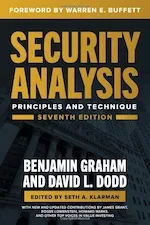
Security Analysis – Benjamin Graham & David Dodd
Takeaways:
The Godfather of Fundamental Investing. The text is almost a 100 years old, but the concept of “margin of safety” is just as applicable today as it would be anytime in History.
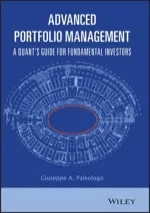
Advanced Portfolio Management: A Quant’s Guide for Fundamental Investors – Giuseppe A. Paleologo
Take Notes:
Giuseppe presents the foundations of multi-factor modeling and portfolio risk management in an intuitive, rigorous, and compact volume. Every chapter compelled me to ‘get to work’ applying the ideas and begin modeling portfolio data.
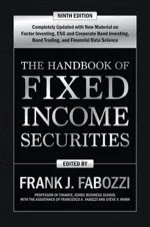
The Handbook of Fixed Income Securities – Frank J. Fabozzi
Textbook Tome:
The definitive reference guide for everything Fixed-Income, from the Godfather of Fixed Income Mr. Fabozzi himself. Given his legendary status, Fabozzi could have easily ‘retired on top’ decades ago. I admire his commitment to continue to contribute to contemporary Finance with revisions to his classic texts and publishing new research in The Journal of Portfolio Management. Weighing-in at +1,900 pages, I would be rather intimidated by any living mortal who has read this volume cover to cover.
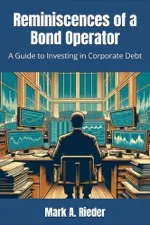
A LinkedIn connection helped in promoting Mark’s new book. I trusted the recommendation, at the time I didn’t even bother looking up Mark on LinkedIn or “study” his handsome headshot on the back cover. Mark shares great professional insights from his years of experience with a clearly distinct voice. Such a distinct voice; that months later, I saw him walk into a room at a conference in NYC and thought “Hey, I’m pretty sure that’s the guy who wrote that book on bonds I was reading on the subway earlier!”
I also saw Joseph Wang present at a conference in NYC. I had read this book cover to cover, and mostly a second time around. You could say I read this book 1.5 times on average. Joseph presents the material so objectively, drawn from his personal professional experience, that I was surprised when the moderator mentioned in his introduction “He is the author of…”. A really interesting read into the modern mechanics of the central banking system.
The Price of Time: The Real Story of Interest – Edward Chancellor
Time is Money, The Rest is History:
Explores the history of interest rates; specifically a capitalist origin story of “lending grain”. These early credit transactions were undertaken with the implicit assumption that the loan would be used for productive purposes. I lend you a seed, you can grow a crop; my share is payback “and interest” of my invested capital, you keep the excess production of the fruits of your labor. Also a contemporary discussion on the “natural rate of interest”, ie. the cost of money, and a stark warning of how suppressed interest-rates, “free money era”, can lead to misallocated capital, excessive risk taking, and a disproportionate concentration of wealth.
A witty collection of story proofs of inescapable elements from Economics. “The Broken Window” fallacy explores many ideas like ‘opportunity cost’, game theory (written in 1946 with Neumann’s treatise on Game Theory being published in 1944), and chaos-theory. The idea that a broken window isn’t all that bad, for it provides the glazier (window-maker) with business, which he in turn can use his earnings to buy his shoes from the cobbler, who in turn can go and buy bread from the baker, who then can use that money to purchase milk from the shop-keeper… That this ‘ripple effect’ of economic activity is realized once the window is broken, instantly shattering the other ‘parallel universes’ of other economic opportunities that could have materiliazed if the shop-keeper could have used that capital in a different way, leading to a different sequence of supply-chain transactions.
A Random Walk Down Wall Street – Burton G. Malkiel
Takeaways:
Anyone not satisfied with the advice of “start with low-cost index funds, consistently invest, and be patient”, read this book. Then you will emerge enlightened, that the most sensible thing a novice investor can do is “start with low-cost index funds, consistently invest, and be patient”. This was my first book I read on Finance, I really appreciate how Malkiel makes sure to present ideas from ‘both sides of the aisle’. At the time it was Fundamental vs. Technical analysis. In a more modern lens it seems to be Quantitative Analysis vs. Everyone else in Finance. He has an up to date book where he discusses Bitcoin.
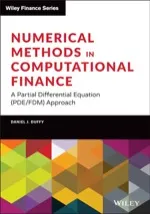
Numerical Methods in Computational Finance – Daniel J. Duffy
Hi Danny:
A full textbook on the mathematical foundations and algorithmic execution of solving problems in computational Finance. I’m taking online courses with Mr. Duffy here, love his sense of humor, his rigor, and commitment to foundations. A book on numerical methods that begins with a review of Real Analysis. Helping me build a stronger foundation towards future studies in C++ and Differential Equations.
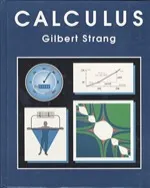
Strang, well known for his love of Linear Algebra, also has a fantastic book on Calculus. A version of this text also appears for free through OpenStax. Being a longtime fan of Gil’s Linear Algebra work, I found myself working through the OpenStax Calculus book for additional exercises and perspective while working through Calc 1-3. It was only at Calc 2 that I noticed the By: line with Gilbert Strang as the lead contributor. Since we share a name, my surname is his given, I e-mailed him a quip and thank you. At 90+ years old and retired, the guy e-mailed me back, just as graciously as you would expect from a ‘sensei’ of Mathematics.
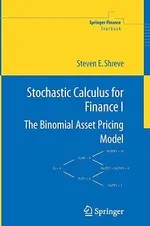
Stochastic Calculus for Finance I – Steven E. Shreve
Coin-Toss Space:
From the Co-Founder of Carnegie Mellon’s Computational Finance Program. This is a newer book on my shelf. Steve introduces the binomial-asset pricing model. In a way of presentation that shows a certain level of practicality towards building a tangible mental model that would develop rigorous market-intuition. I know there exists a way for deriving the Black-Scholes options pricing equation with this model, but perhaps that is explained in Volume II.
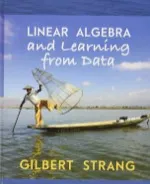
Linear Algebra and Learning from Data – Gilbert Strang
Ai Godfather:
Gil was revolutionary in teaching generations of students Linear Algebra at MIT, and exposing millions of others to the idea through OpenCourseWare and published lectures on early YouTube. Linear Algebra is the backbone of machine-learning, which in turn is the foundation of modern Ai systems. Ai seems to be pervasive these days, and the promise that it could be the largest technological revolution of the century. This could make Prof. Strang a leading candidate for one of the most influential people of all time.
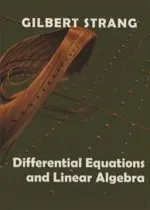
Differential Equations and Linear Algebra – Gilbert Strang
Favorite Author Maybe:
A big fan of Gil Strang obviously. It’s wild to me that this guy can have 4+ textbooks covering Linear Algebra, yet all of the material feels unique, singular, and self-contained. Master of his craft.
Introduction to Probability – Joseph K. Blitzstein & Jessica Hwang
GOAT of Probability:
Not the Goat behind the Monty Hall Problem. Joe emphasizes building an intuitive understanding of a surprisingly non-intuitive subject. He weaves in historical references that are enriching with the subject. His lectures are on YouTube, he could be considered the Gilbert Strang of Probability in that regard. I admire that as a professor he is an advocate for patience, paraphrasing him: “If this isn’t immediately obvious, sit with it! It may take a couple hours, days, or even weeks of staring at the problem; but once you ‘see it’ it will then become immediately obvious and you will never forget it”.
Written by the creator of Pandas. Again, when all these people invent such cool technologies and write about it, why pay for some online crash-course when you can just learn directly from the inventor.
Helpful for building mental models for handling the large, high-frequency, and sensitive data that is prevalent in the Financial Industry. Examples for building robust data pipelines as well.
This literally lived in my pocket while learning SQL. A friend in my neighborhood had known each other for over a year, he sees the acronym SQL sticking out of my blazer pocket one day and says “Hey, you’re learning SQL!?!?”. We had so many other nerdy (intellectual) topics of discussion, it took us over a year to discover we were both avid programmers.
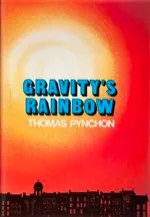
It was selected for the 1974 Pulitzer Prize for fiction. The Pulitzer Advisory board responded by just not issuing a Pulitzer in that category that year, citing the book to be ‘turgid’. Not for the faint of heart. It’s a complex, dense, fractal of a post-modern novel. Equal parts beautiful, humorous, and horrifying; so a 750 page overview of the modern human condition. I measure my life as ‘before I read Gravity’s Rainbow’ and after. My favorite work of literature, yet I would not recommend for 99.9% of readers.
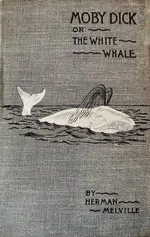
The above, Gravity’s Rainbow, is often called ‘the post-modern Moby Dick’. There are similarities, yet I would NOT recommend the above for everyone. I would definitely recommend EVERYONE read Moby Dick. This book made me laugh-out-loud, literally lol, several times during reading.
This is the intersection of human economics, politics, religion, and individuality. Presented in this psychedelic blend of Star Wars meets Lord of the Rings.
"I must not fear.
Fear is the mind-killer.
Fear is the little-death that brings total obliteration.
I will face my fear.
I will permit it to pass over me and through me.
And when it has gone past I will turn the inner eye to see its path.
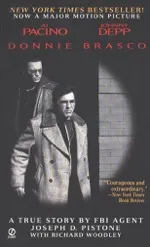
Donnie Brasco: My Undercover Life in the Mafia – Joseph D. Pistone
Donnie:
One of my favorite books. Learned so much about human psychology from this memoir. One of America’s first undercover FBI agents doing the impossible, infiltrating the Mafia during the 1970s. A pretty fun movie too with Al Pacino and Johnny Depp.
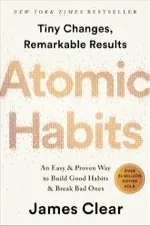
Practical mental model and frameworks for designing the life you want. The theory of compound interest applied to personal and professional habits. Taught me things to think about risk management engineering; “if you don’t have a television in your living room, then you cannot find yourself watching television.” I quit drinking 3+ years ago. Built a 6 days a week gym routine. I put my phone on silent and a closed-drawer when I really want to focus on studying. Small consistent changes have built me to be a better person today and tomorrow.
Behave: The Biology of Humans at Our Best and Worst – Robert M. Sapolsky
Wow:
I read 2 chapters. If human behavior, sociology, neuroscience, endocrinology, and evolutionary biology interest you; you will find this interesting. Read 3 chapters even and I bet it will be interesting.
How to Win Friends and Influence People – Dale Carnegie
Smile more:
Just timeless advice. Smile at people, and pay attention to them. Just as valuable advice today in 2026 as 90 years ago. Good how-to manual to reintegrate into civil society if you’ve found yourself in some sort of modern social-media technology rabbit hole.
The Art of Doing Science and Engineering: Learning to Learn - Richard W. Hamming
Takeaways:
A great mental model of “everything the classroom doesn’t teach you”. Just as relevant as ever. Hamming remarks on the accelerating pace of technological advancements. Stresses the importance of mastering foundations and problem solving skills, so that you can constantly adapt and learn new things as the world around us continually changes. Some passages literally gave me goosebumps for how prescient his words seemed reading this in the Ai days we find ourselves in now. Inspired me to pursue studying foundational mathematics more seriously.
This book really allowed me to change how I communicated which had massive ripple effects of the world around me. I live at the same address for almost 4 years now, yet my relationship with the people around me is so different, I may as well be in a different world. I definitely have to remind myself of the title, “Stop Talking” regularly.
An Artificial History of Natural Intelligence – David W. Bates
Human First Intelligence:
Explores the history and philosophical underpinnings of this uniquely human idea of ‘intelligence’. Including how we utilize ‘technology’, defined in a broad sense to include tools and language, to not only perceive our environment, but be active participants in realizing our reality.
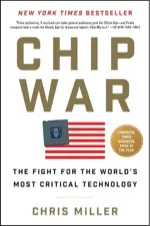
Chip War: The Fight for the World’s Most Critical Technology – Chris Miller
Semiconductors:
A great book recommended to me by a CEO of a tech company. That the most valuable commodity on the globe at the moment might be semiconductors, and the complex supply-chain to create them and how it is intertwined with multiple geopolitical tensions. Must read for any technology analyst.
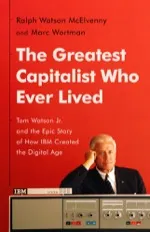
The Greatest Capitalist Who Ever Lived: Tom Watson Jr. and the Epic Story of the IBM Corporation – Ralph Watson McElvenny & Marc Wortman
International Business Machines:
A great history of IBM and the evolution of the computing revolution. A thorough biography that spans two generations of leaders at a company that was truly ahead of its time, multiple times. Some interesting nuggets of corporate America history, like IBM ‘Songbooks’, singing praise to the CEO at 8am every morning at headquarters. Remember, the early computers were mechanical devices before evolving to the digital age. Standout quote from Tommy Sr. to his son, “electronic computers have NO place in America, that will never catch on”. It later became to identify not only the company, but the entire US economy.
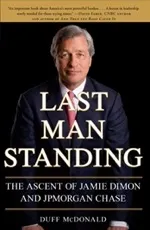
Last Man Standing: The Ascent of Jamie Dimon and JPMorgan Chase – Duff McDonald
Legend:
A really great read on of one of my favorite CEOs of Finance. Duff McDonald is a great journalist, who does his best to present first-hand accounts from multiple sources. Describing events of the 2007/08 Great Financial Crisis and Jamie Dimon’s professional career from multiple angles. “Sandy said this… Jamie said this… His secretary said this… Well, it probably happened somewhat like this…”
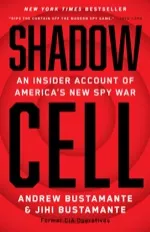
An engaging read on operational security, situational awareness, and psychological tracking from a former CIA operative. Interesting to learn about information models.
At times labeled controversial, 48 Laws is historical and psychological look at a human power dynamics. Reading this I realized nearly every interpersonal fall-out I have experienced has stemmed from a violation of these ‘hidden’ rules of engagement.
The asymmetricly influencer of Berkshire Hathaway and Warren Buffet’s right-hand man. Part biography, part how-to manual of passing on Munger’s worldly wisdom. Emphasizes multi-displinarian wisdom applied to investment research, life, and business.
A must-read for dancers, fitness instructors, and physical therapists. A comprehensive anatomy textbook that focuses on the action and movement of muscular and skeletal structures.
This is a great how-to guide for fitness, physical therapy, and just taking care of your body.
Desk Bound: Standing Up to a Sitting World – Dr. Kelly Starrett
Takeaways:
By the above author. Addressing ergonomics and corrective exercise for desk-jockeys. Turns out human beings didn’t evolve for 1000s of years to sit at desks.